essay
Podcast to shorts: why AI slop fails and what works
The Cliphound editors Human curation team
Search for how to turn a podcast into shorts and one of the results ranking today is a video literally titled 'How To Create Podcast Shorts (That Aren't AI Slop)'. That is not a fringe complaint, it is evidence of a real pattern. Here is why auto-clipped shorts underperform, what a human editor looks for instead, and where an AI tool is still genuinely the right call.
In short
Auto-clipped podcast shorts often underperform because automated tools optimise for a scorable signal and output volume, not judgement, producing context-free cuts and caption errors. A human editor instead looks for complete beats, standalone lines and genuine reactions. AI tools remain a reasonable choice for anyone posting daily at high volume; the trade-off is which one you need.
Why auto-clipped shorts underperform
The “AI slop” label did not appear from nowhere. Enough people have watched an automated clipper’s output and recognised the same problem for the term to have earned its own critique video, ranking on the same results page as the tools it criticises. The problem has three parts, and none of them are really about the technology being bad at cutting video.
Volume-first selection. Most automated clippers are built to return many candidates, because a tool that hands you thirty options and hopes three are usable looks more impressive in a demo than one that hands you three, chosen with intent. That means the tool is optimising for a scorable signal, loudness, a keyword hit, a sentiment swing, rather than for whether the moment actually works, and it would rather over-deliver quantity than risk delivering too few.
Context-free cuts. An algorithm cuts where a rule fires: a pause, a laugh, a spike in energy. It has no way to know whether the sentence before that spike was necessary for the punchline to land, or whether the “laugh” it detected was someone coughing. The result is clips that start mid-thought or end half a beat before the payoff: technically correct cuts that miss the actual moment.
Caption noise. Auto-captioning without a human reviewing it produces literal transcription errors: homophones swapped, names misspelled, emphasis landing on the wrong word. None of that registers consciously with a viewer, but all of it quietly undermines a clip in the first two seconds, which is when most people decide whether to keep watching.
If you want the DIY route regardless of any of this, how to clip a podcast walks through the manual tools step by step. What follows here is what changes once a person, not a script, is doing the choosing.
Why this matters more for talk-heavy content
Podcasts and interview-style video are especially exposed to the volume-first, context-free problem, because almost the entire value is in what is being said, not how it looks. A gaming clip or a music clip can work on visual spectacle or a beat drop alone, something a loudness-detection algorithm can spot reasonably well. A podcast clip has no equivalent visual tell. The moment is entirely inside the sentence structure: the pause before a punchline, the specific word someone reaches for, the beat of silence before an honest answer. Understanding that requires understanding language, not measuring a waveform, which is exactly the gap an automated tool cannot close and a human editor can.
What a human editor looks for instead
A human editor watching a full episode is solving a different problem: not “what scores highest” but “what would make sense to someone who has never heard this show, with zero set-up.” Three things tend to separate a clip that works from one that doesn’t.
A complete beat. Every strong clip is a self-contained unit: a setup, a development and a payoff, all inside the same thirty to sixty seconds. Cutting mid-beat because an algorithm found a pause in the wrong place is the single most common way an automated tool wrecks an otherwise good moment.
A standalone line. The best clips make sense with none of the surrounding episode. If a viewer needs to know who the guest is, what the previous ten minutes covered, or what question prompted the answer, the clip has already lost most of its audience before it has made its point.
A genuine reaction. Real laughter, a pause before someone says something honest, the moment a guest changes their mind mid-sentence: these read instantly as real, and they are exactly the kind of thing a loudness or engagement heuristic either misses entirely or mistakes for noise.
Picture a forty-minute interview where a guest spends two minutes building up to an honest, slightly risky admission. An automated tool scanning for volume spikes might miss it entirely, because the moment itself is delivered quietly, almost as an aside. A human watching the whole thing catches it precisely because the build-up mattered: the quiet delivery after two minutes of momentum is what makes the line land. Cut without that build-up, the same eight words mean nothing.
None of this is taste in the abstract. It is having watched the whole recording and knowing which ten seconds would survive being shown to a stranger with no context at all, which is a judgement call, not a score.
An automated clipper vs a human editor
| What an automated clipper does | What a human editor does |
|---|---|
| Scores the whole recording against a signal like volume or keyword density | Watches the whole recording and judges what would land with a stranger |
| Cuts on a fixed rule: a pause, a laugh, an energy spike | Cuts where the thought actually finishes |
| Returns a high volume of candidates and lets you sort the good ones from the noise | Ships fewer clips, each one chosen on purpose |
| Captions the audio literally, errors included | Checks every caption against what was actually said |
Neither approach is dishonest about what it is. One is built to process volume quickly; the other is built to make a judgement call. The right one depends on which problem you actually have.
One real episode, watched properly
The clearest way to show this rather than argue it is with a real example. For the 44-minute episode in our case study, a friend’s improv show that is professionally filmed and that we clip, the editor watched all of it and chose ten clips, not forty, because only ten moments stood on their own once the surrounding context was stripped away.
That works out to roughly one finished clip for every four and a half minutes of recording. It is not a formula to apply mechanically to your own show, episodes vary, but it is a reasonable illustration of how much of a typical episode is scene-setting rather than a moment that stands alone.
One episode. Its best moments.
A real editor watched all 44 minutes and pulled the moments worth posting.

The full episode · 44 min
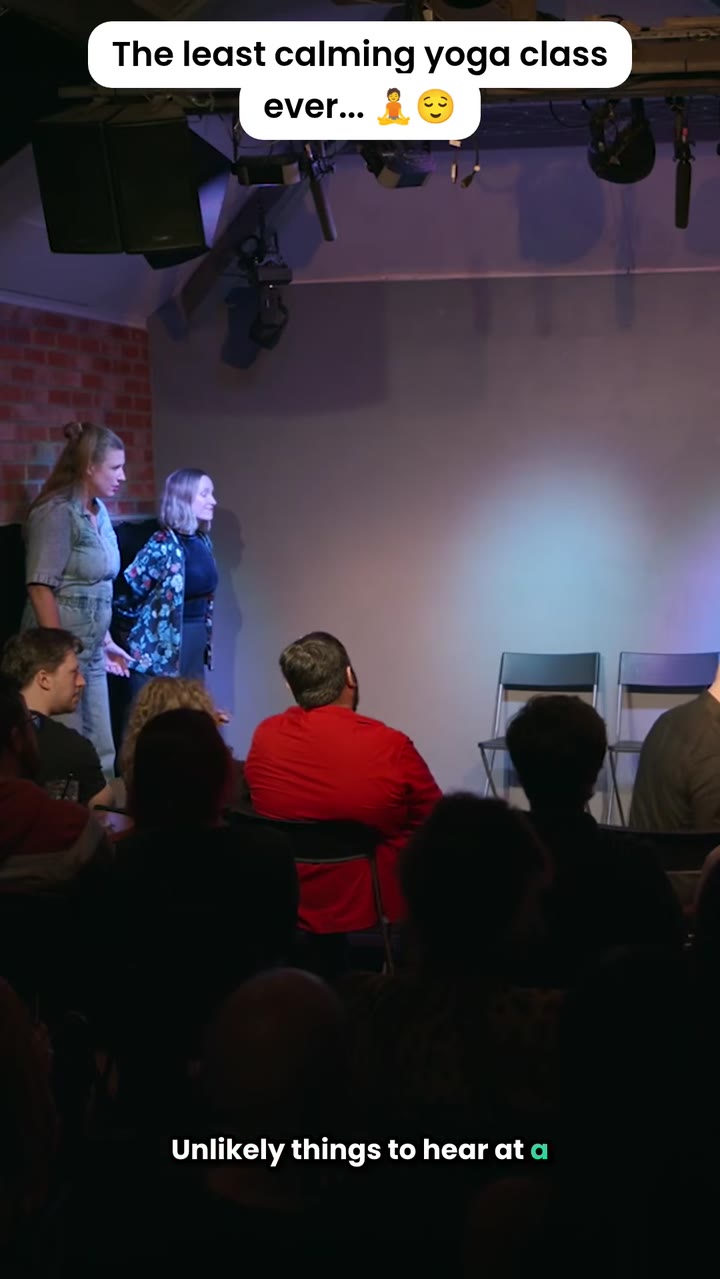
One of the ten clips we chose
If you would like a done-for-you podcast clipping service to do this for your own show every week: get started - three quick questions, no commitment, nothing to pay to get started.
The honest exception
None of this makes automated tools bad at their actual job. They are fast, inexpensive and available instantly, and if your strategy depends on posting daily at high volume across several platforms, an algorithm sorting through hours of footage in minutes is doing something no human editor can match on speed or cost. The trade-off is judgement: volume and speed in exchange for a lower hit rate per clip.
If you are already using an AI tool and it is working for your posting cadence, that is a reasonable trade, not a mistake. If you are weighing up which automated option to switch to, our Opus Clip alternative comparison covers the tool side of that decision. If you want to see how the pricing and the pitch compare directly against a human alternative, Cliphound vs Opus Clip lays out both side by side.
As a rough guide: if you are publishing several times a day across TikTok, Reels and Shorts simultaneously, an AI tool’s speed advantage outweighs its judgement gap, because at that volume no human process can keep pace regardless of price. If you are publishing a handful of times a week and each clip is doing real work, building an audience, feeding a pipeline, opening conversations with potential clients, the judgement gap is the whole ballgame, and speed stops being the constraint that matters.
The honest dividing line here is not “AI bad, human good.” It is volume against judgement: how many clips you need, against how many of them actually need to be right. If you already know which side of that trade-off you are on, the choice mostly makes itself. If you don’t, the test is simple: pull up your last five posted shorts and ask whether a stranger with no context would watch past the first three seconds. If the answer isn’t obviously yes, judgement was probably the missing ingredient, not volume.
Frequently asked questions
Are AI clipping tools bad? +
No. They're fast, inexpensive and available instantly, which makes them a reasonable choice if you're posting daily at high volume across several platforms. The trade-off is judgement: an algorithm optimises for a scorable signal and returns a high volume of candidates, rather than watching the whole episode and choosing the few that would land with a stranger.
Why do some auto-generated podcast clips feel random or awkward? +
Usually because the tool cut on a fixed rule, a pause, a laugh, a spike in volume, rather than understanding whether the moment made sense on its own. That produces clips that start mid-thought, end before the payoff, or centre on a reaction that wasn't actually a laugh.
What makes a podcast clip actually work? +
Three things: a complete beat (setup, development and payoff in the same clip), a line that makes sense with zero context from the rest of the episode, and a genuine reaction rather than a manufactured one. All three take someone watching the full recording to judge properly.
Should I use an AI tool or hire a human editor? +
It depends what you're optimising for. If you need a large volume of clips fast and can live with a lower hit rate, an AI tool does that job well. If you'd rather post fewer clips that are each chosen deliberately, that's a human editor's job specifically.
How many clips does a human editor typically choose from one episode? +
On the 44-minute episode in our case study, a friend's professionally filmed improv show that we clip, a human editor chose ten finished clips, not forty. Most of an episode is set-up and connective tissue; only a handful of moments usually stand on their own once that context is removed.
Can I still post daily if I use a human editor instead of an AI tool? +
It depends on the plan. Cliphound's tiers run from 12 clips a month up to 75, which suits a steady multi-times-a-week cadence rather than several posts every single day. If daily volume across every platform is the goal, an AI tool is genuinely the better-suited option for that specific job.
Related articles
The Opus Clip alternative that is a human, not another AI
The Opus Clip alternative that swaps another algorithm for a human editing team.
case-studyOne 44-minute episode: the clips a human chose
The real case study: one 44-minute episode, ten clips, and the judgement calls behind each one.
guideHow to clip a podcast (and when to stop doing it yourself)
Every honest DIY method to clip a podcast, and when it stops being worth doing yourself.
Ready to see what a human would choose from your episode?
Three quick questions. No commitment, nothing to pay to get started.
Get started →