case-study
One 44-minute episode: the clips a human chose
The Cliphound editors Human curation team
Every clip we publish started as a full episode nobody had clipped yet. This is the real one: 44 minutes of improv, watched start to finish, cut down to ten clips. Here is the judgement behind that number, not just the highlight reel.
In short
A human editor watched a full 44-minute improv episode and chose ten clips from it. The other minutes were not wasted footage, they were considered and rejected: setups without a payoff, moments that needed the room, lines that could not stand alone on their own. The full episode and one of the ten clips are published here as real examples.
What was the episode?
The source material is a 44-minute improv episode with a story attached: it belongs to a friend’s improv troupe, it was filmed and edited by a professional film company, and it is one of the first shows Cliphound ever clipped. The troupe were having their shows professionally recorded and wanted short clips cut from them, which is exactly the job this service grew out of. One editor watched the whole thing, start to finish, before cutting anything. Ten clips came out of it, and the full episode plus one of those ten is published below with the troupe’s blessing, so you can watch the actual before and after rather than take our word for it.
We picked this episode as the example on purpose. Client footage stays private: a client only ever sees their own finished clips, and nobody else sees anything at all. This troupe gave us permission to publish the entire source alongside the finished clip, with nothing held back. Most of what an editor does is invisible to a client, who only ever sees the finished clips and never the raw material they came from. This is the rare case where you can see both ends: the full 44 minutes and what one of them became.
One episode. Its best moments.
A real editor watched all 44 minutes and pulled the moments worth posting.
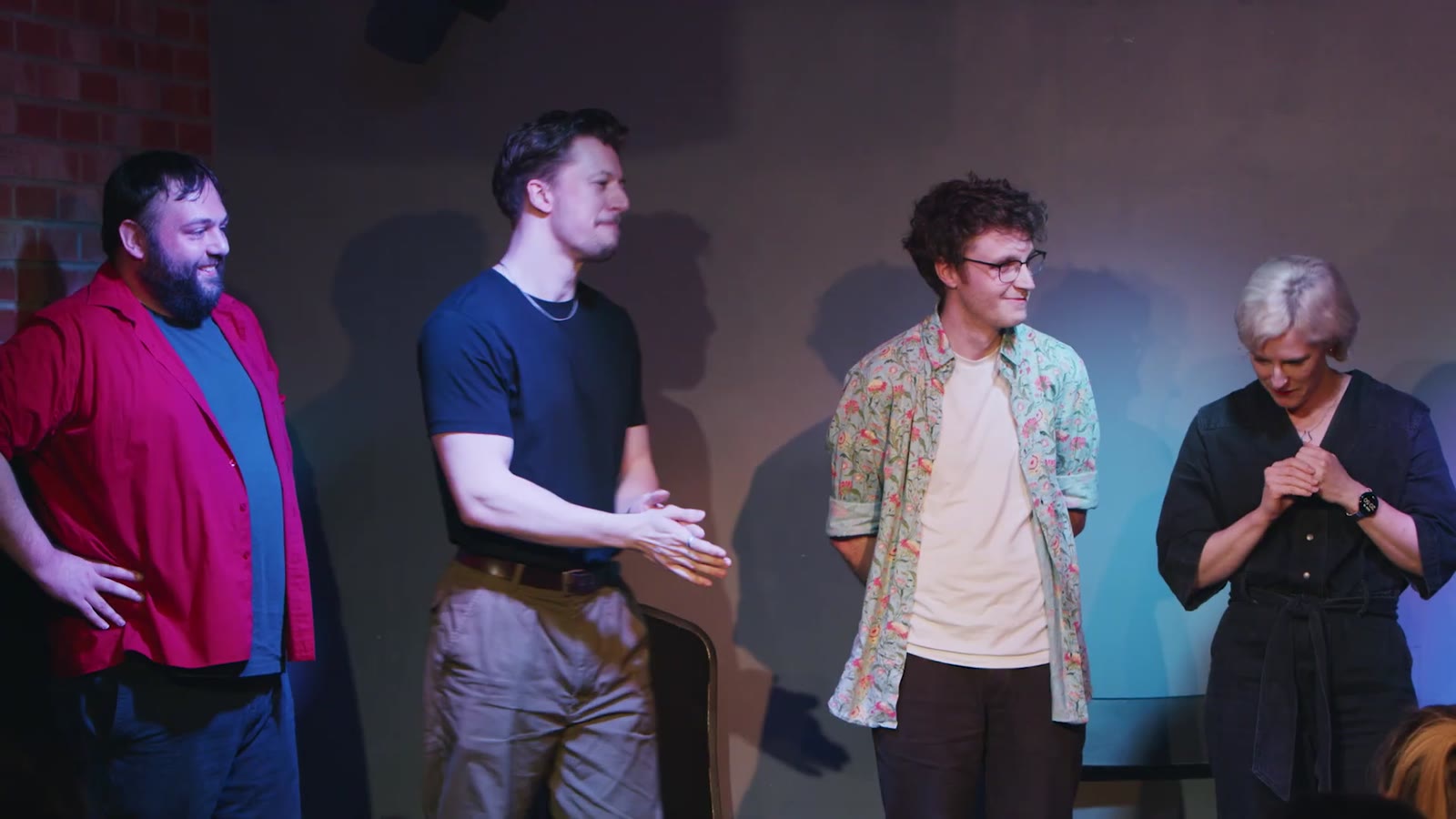
The full episode · 44 min
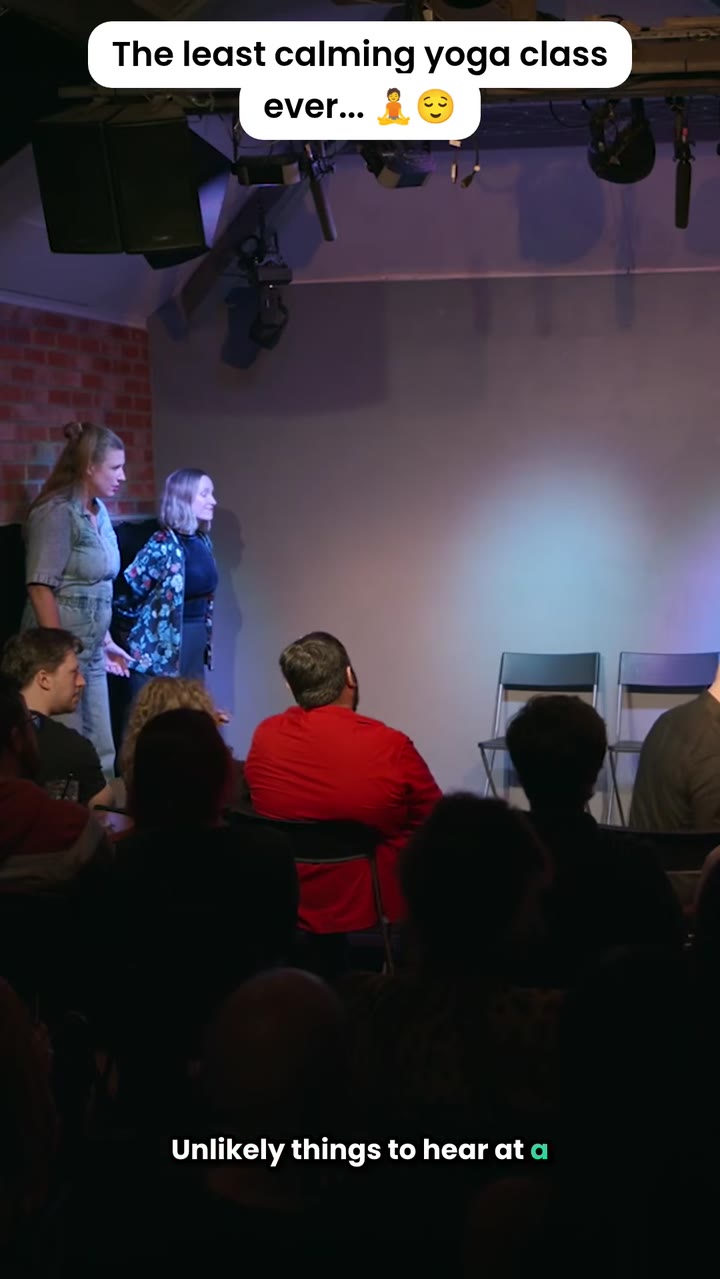
One of the ten clips we chose
What makes a moment work?
A good clip needs three things, in order. First, a complete beat: a moment with its own beginning and end, not a fragment that depends on what came thirty seconds earlier. Second, a laugh, a line or a turn that actually lands on its own, not one that only works because everyone in the room already knew the context. Third, a line that stands alone out of context: it still has to make sense, and still has to land, played to someone who has never heard the episode.
Most footage fails at least one of these tests. A line can be funny in the room and flat on a phone screen. A bit can be well-built and still need forty seconds of setup to pay off, which is too long for a clip. None of this is something software can judge. It can measure pauses, laughter volume or talking speed, but it cannot tell you whether a joke only worked because everyone already liked the person telling it.
These three questions sound simple written down, and they are simple to state. They are not simple to apply consistently, because applying them means holding the rest of the episode in your head while judging a twenty-second window against it. That is the part that resists shortcuts: you cannot know whether a line survives out of context without knowing, in detail, what the context actually was.
Why don’t most minutes make the cut?
Ten clips from 44 minutes means most of the episode did not become a clip, and that is not a failure rate, it is the job. Long-form conversation and improv run on a different kind of attention than a 30-second vertical video: rhythm, callbacks and slow build, most of which gets lost the moment you cut a clean window out of the middle of it.
The discipline is in watching everything and being willing to reject most of it. Keep too much and you end up with clips that only make sense if someone has already watched the full episode, which defeats the point of a clip. Cut too aggressively and you end up with fragments that are technically short but don’t actually say anything. Ten was the number this particular episode earned. It was not a target we cut down to.
There’s a faster version of this job that skips the discipline: skim for the loudest reaction, cut around it, move on. It produces clips faster, and it produces worse ones, because loud does not mean good, and a strong reaction in the room does not always survive being replayed to someone who wasn’t there. The slower version, watching everything and rejecting most of it, is slower because it has to be.
What did we leave out, and why?
We are not going to invent timestamps or describe specific unpublished moments from this episode, because that is exactly the kind of embellishment good curation is supposed to prevent. What we can say honestly is why footage gets left out in general, because the same categories apply to every episode we edit, this one included:
- Setups without a payoff. A bit that is still building when the conversation moves on to something else.
- Moments that need the room. A reaction, in-joke or callback that only lands if you already know what came before it.
- Lines that don’t survive alone. Something that reads as a fragment once it is lifted out of the surrounding conversation, even if it got a real laugh live.
- Repetition. The same idea landing twice. The stronger version becomes the clip; the other stays in the full episode.
None of this means the rest of the episode is weak. It means it belongs in the full 44 minutes, not in a clip built to work with zero context in someone’s feed.
Why publish the whole episode, not just the clip?
Because a clip on its own only proves we can edit video. The full 44 minutes next to it proves something different: that the ten clips came from a genuine watch-through of everything, not a lucky highlight someone stumbled on. Most editing work, ours included, happens on footage nobody but the editor and the client ever sees in full. Publishing source material we have permission to share in full is the only honest way to let you check our working rather than trust a claim about it.
How do you get from 44 minutes to ten clips?
The process is quick to describe and slow to do properly. Watch the whole episode once, start to finish, without cutting anything. Mark every candidate moment as you go. Then test each candidate against the three questions above: is it a complete beat, does it land on its own, does it survive out of context. What survives becomes a clip. What doesn’t goes back into the full episode, which is exactly why we publish that too, so you can see what didn’t get pulled out as well as what did.
Auto-clippers guess. We choose. On this episode, that meant watching all 44 minutes to find ten moments worth someone’s time, not running a highlight-detection pass and hoping the algorithm’s idea of a good moment matched a human one.
If you’re curious what this kind of editing actually costs when someone else does it, we’ve laid out real rates by tier separately.
What does this mean for your show?
This is the same process behind every episode we take on, whether the source is a comedy show, a business podcast or a recorded webinar. The categories of what works shift slightly by format; the discipline of watching everything and rejecting most of it does not. It’s the same judgement behind our podcast clipping service: a human watching your full episode and choosing what’s worth posting, rather than a script scoring it for you. If your source is video rather than a podcast feed, the same approach applies through our video clipping service.
If you’ve already tried an AI-first clipper and ended up with a folder of technically-correct fragments nobody wanted to post, see how Cliphound compares to Opus Clip specifically. The short version: an algorithm can flag a loud laugh or a fast talking pace. It cannot tell you whether a line still makes sense to someone who wasn’t in the room, which is the actual question a clip has to answer.
Frequently asked questions
How long is the episode in this case study? +
Forty-four minutes: a friend's improv troupe, professionally filmed, and one of the first shows Cliphound ever clipped. The troupe gave us permission to publish the whole episode rather than a single clip, which is what makes this walkthrough possible. One editor watched it in full before cutting anything.
How many clips came out of the episode? +
Ten. One of them is published above alongside the full episode, so you can compare the source material to a finished, captioned, vertical clip rather than take a description of the process on trust.
Why didn't the whole episode become clips? +
Because most of a 44-minute conversation is not built to survive being cut into a 30-second window. Ten clips is what this episode's content supported, not a quota we were working towards.
What happens to the minutes that don't become a clip? +
Nothing dramatic, they stay in the full episode. Being left out of the clip selection is not the same as being cut for time or quality, it simply means the moment needed the surrounding conversation to make sense.
Is this the same process you'd use on our show? +
Yes. The three questions we test every moment against, whether it is a complete beat, whether it lands on its own, whether it survives out of context, do not change by format. What changes is how much of a given episode ends up qualifying.
Related articles
Podcast clipping service: a human picks the moments
A done-for-you podcast clipping service - a human editor picks the moments, not an algorithm.
comparisonCliphound vs Opus Clip: fewer clips, the right ones
Cliphound vs Opus Clip, feature by feature - including what OpusClip actually costs.
comparisonVideo clipping service with a human editing team
A video clipping service with a human editing team - not an algorithm guessing at your clips.
Let's see your content
Three quick questions. No commitment, nothing to pay to get started.
Get started →